AI Automation
What is an AI agent? How agents differ from automation
"Agent" gets attached to almost any AI feature these days, which makes it sound more exotic than it usually is. Once you strip the marketing away, the difference between an agent and a standard automation (see what is AI automation? for the broader concept) comes down to one thing: how many possible actions it can choose between.
The actual difference
A standard automation follows one fixed path: trigger happens, same sequence of steps runs every time. An AI agent is given a goal and a set of allowed actions, and it decides which action fits the situation in front of it — rather than a person or a fixed rule deciding in advance.
A simple way to tell them apart
- No decision points — the same steps run every time → that's standard automation
- One decision point with a fixed rule ("if the deal size is over $10k, notify a manager") → still automation, just a conditional one
- Multiple possible actions, chosen based on judging the specific situation → that's an agent
How we scope the guardrails
"Autonomous" makes people nervous for good reason — an agent that can take any action with no oversight is a real risk in a business context. Every agent we build is scoped to a specific task, with guardrails and approval steps defining exactly which actions it's allowed to take on its own versus which ones need a human to confirm, plus monitoring and fallbacks for when something doesn't fit the expected pattern. See our AI agents service for how this gets scoped for a specific use case.
Task Assigned
A defined goal, not an open-ended instruction
Agent Reads Context
Pulls in the relevant data needed to judge the situation
Agent Decides
Chooses which allowed action fits this specific case
Guardrail Check
Approval step for anything outside a safe, pre-defined range
Action Executes
The confirmed action runs
Outcome Logged
Result recorded for monitoring and review
Task Assigned
A defined goal, not an open-ended instruction
Agent Reads Context
Pulls in the relevant data needed to judge the situation
Agent Decides
Chooses which allowed action fits this specific case
Guardrail Check
Approval step for anything outside a safe, pre-defined range
Action Executes
The confirmed action runs
Outcome Logged
Result recorded for monitoring and review
The agent receives a scoped task.
A scoped agent handling one task, with a guardrail before anything external happens.
Where this shows up in practice
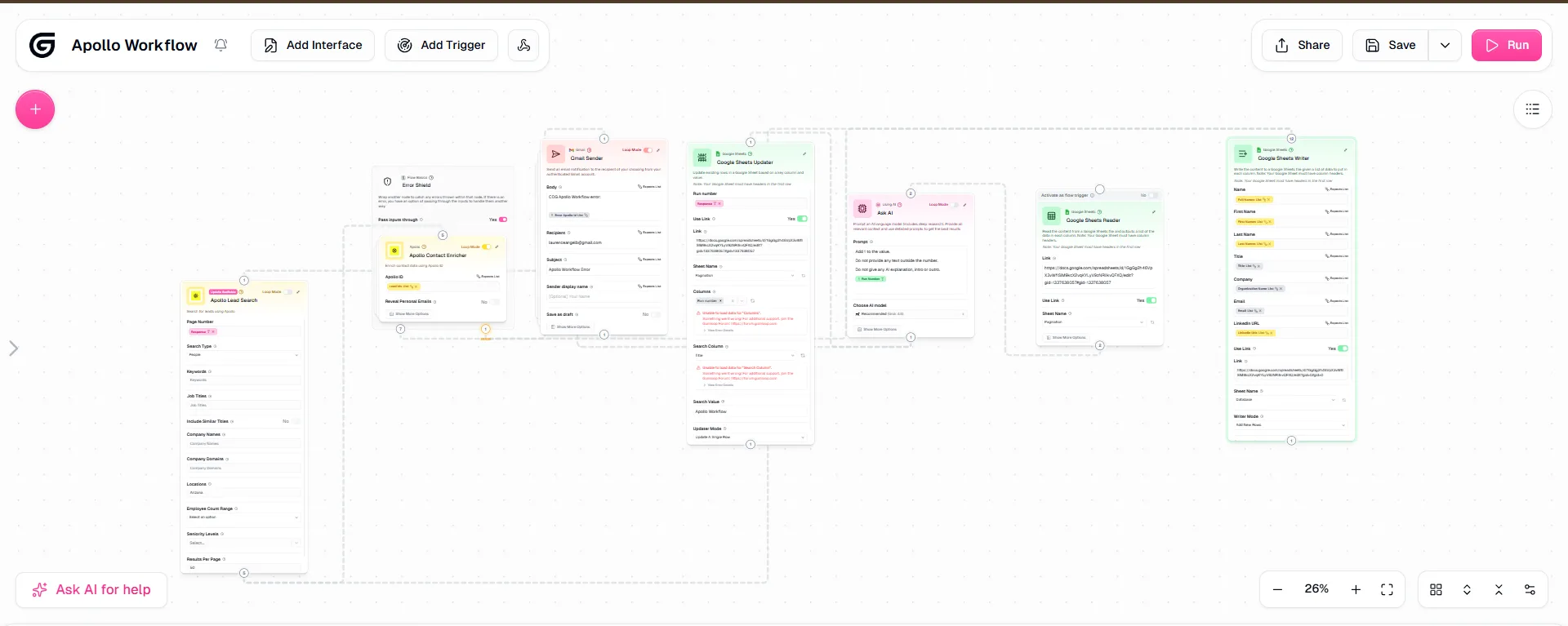
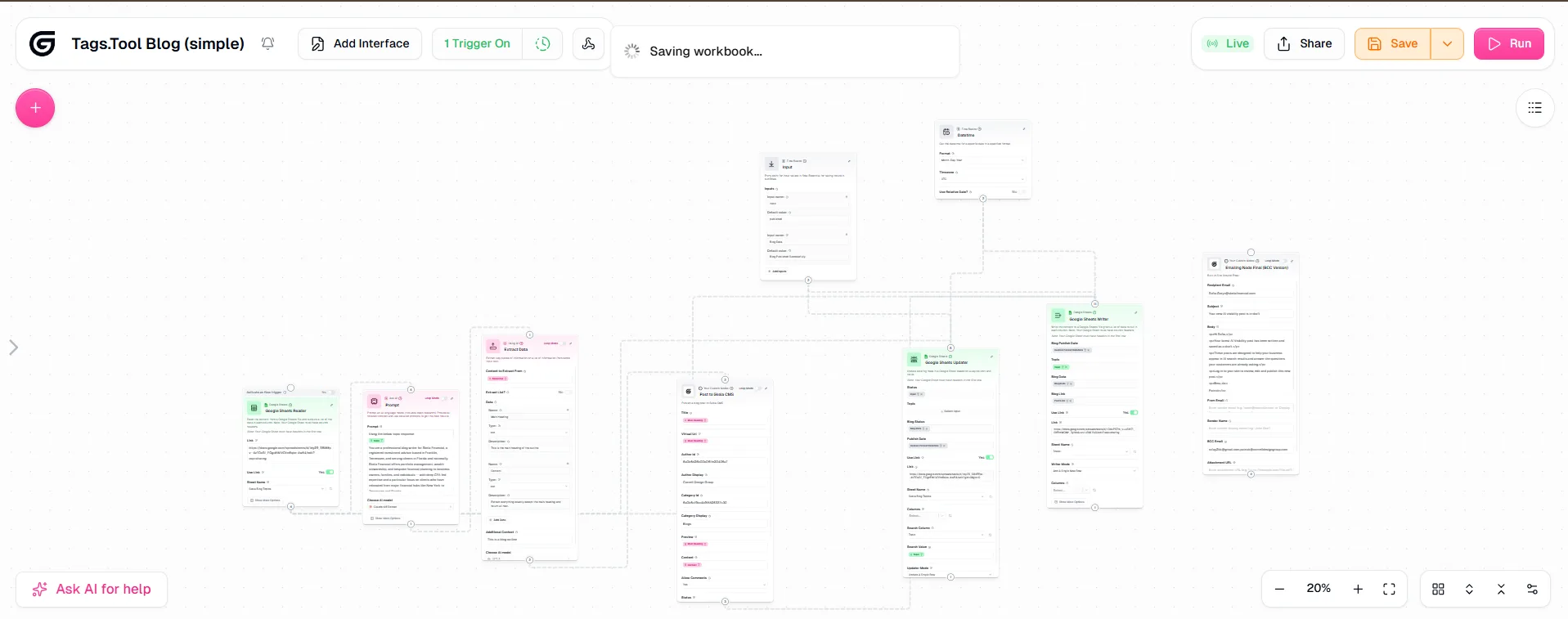
Most of the scoped, agent-style decision points we've actually built are narrower than people expect — judging which leads match a set of criteria in our Apollo-based lead sourcing workflow, or deciding which tags apply to an incoming record in our automated tagging tool. Neither runs unsupervised on anything customer-facing without a review step.
How is an AI agent different from a chatbot?
A chatbot responds to a conversation. An agent takes action — updating a record, routing a lead, applying a tag — based on judging a situation, usually without a person typing anything into it at all.
Are AI agents safe to use for business tasks?
Safe within the scope you define. The risk isn't the agent itself, it's giving one too wide a set of possible actions without a guardrail — which is why every agent we build has a defined, narrow task and an approval step for anything outside a safe range.
Do AI agents need to be built from scratch?
No — most of the value comes from scoping the task and guardrails correctly, not from custom-building the underlying AI model. See our AI agents service for how we approach scoping a specific one.
Related service
Purpose-built agents for repeatable tasks