AI Automation
What is AI automation? A practical guide for businesses
"AI automation" gets used as a catch-all for everything from a simple email autoresponder to a fully autonomous AI agent. That vagueness makes it hard to know what you'd actually be paying for. Here's a working definition, and a realistic picture of what it does and doesn't do.
What AI automation actually means
AI automation is a workflow that connects your existing tools — your website, CRM, ad platforms, inbox, spreadsheets — and uses AI to handle the repetitive decision-making in between them, instead of a person doing it by hand every time. The "automation" part is the connective tissue (triggers, data movement, scheduling); the "AI" part is what handles judgment calls that used to require a human glance, like reading a lead's message to route it correctly or drafting a first pass of a reply.
It's different from traditional automation (if-this-then-that rules) because it can handle unstructured input — a messy form submission, a long email, a scraped social post — not just clean, predictable data.
What businesses can realistically automate
- Lead capture and enrichment — pulling in a new lead, filling in the missing details (company, role, contact info), and getting it into your CRM clean
- Follow-up and nurture sequences — timed messages that keep a conversation moving without someone remembering to check a spreadsheet
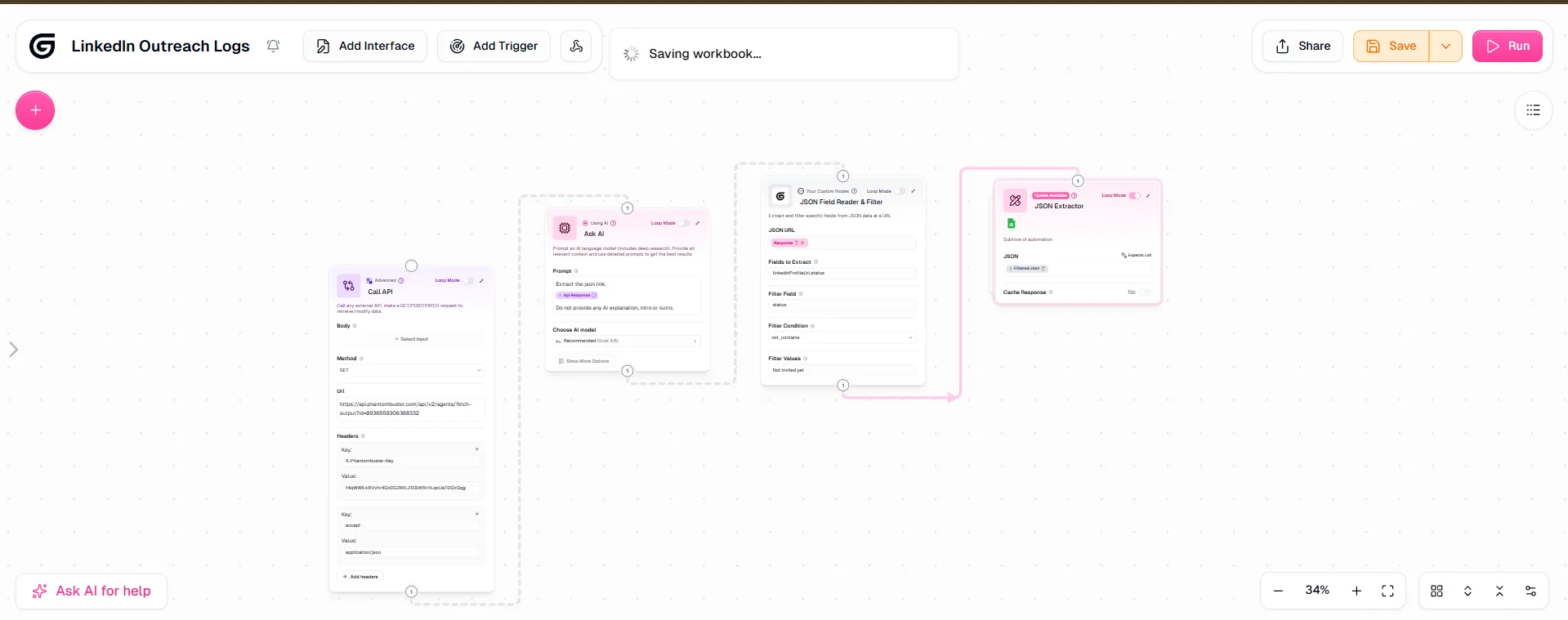
- Outreach at a defined scale — connection requests and opening messages personalized per prospect, not a single blasted template
- Content drafting and publishing — a first draft, formatted and pushed toward a CMS, with a human review step before it goes live
- Reporting — pulling numbers from ad platforms, GA4, and your CRM into one scheduled report instead of manual copy-pasting
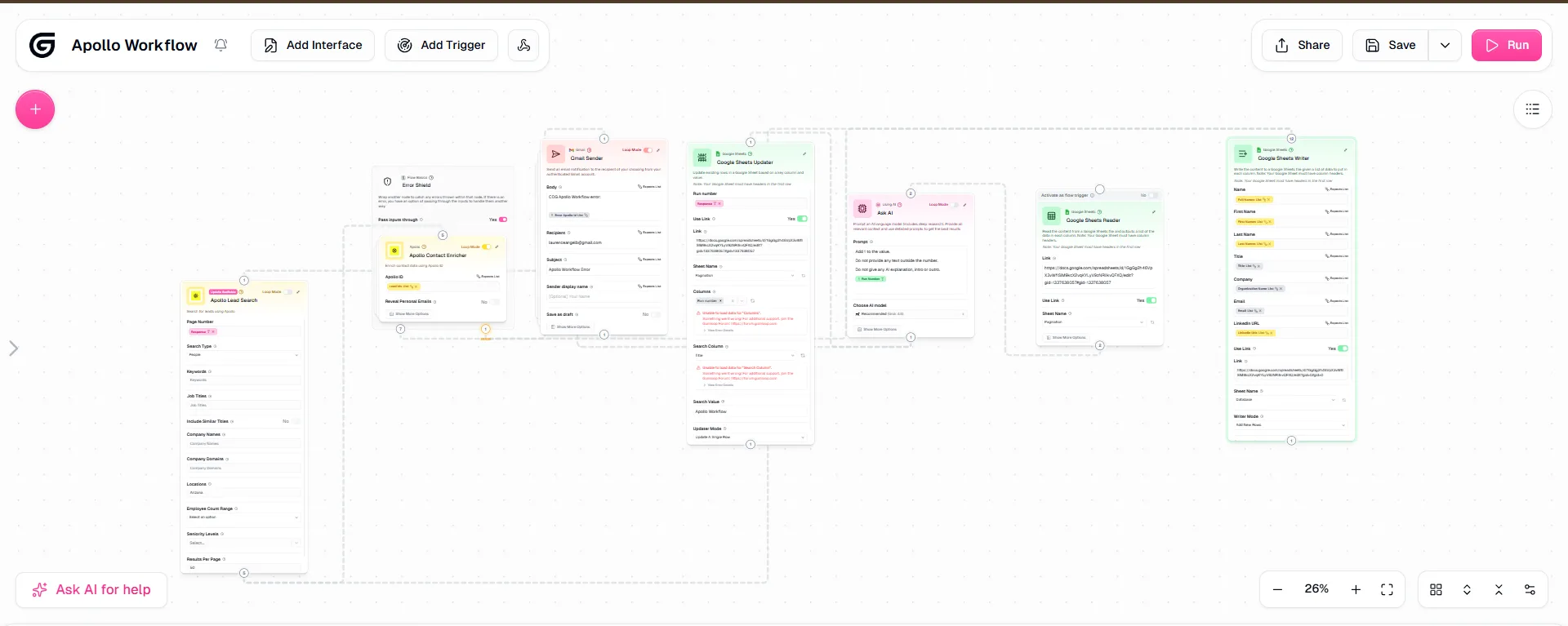
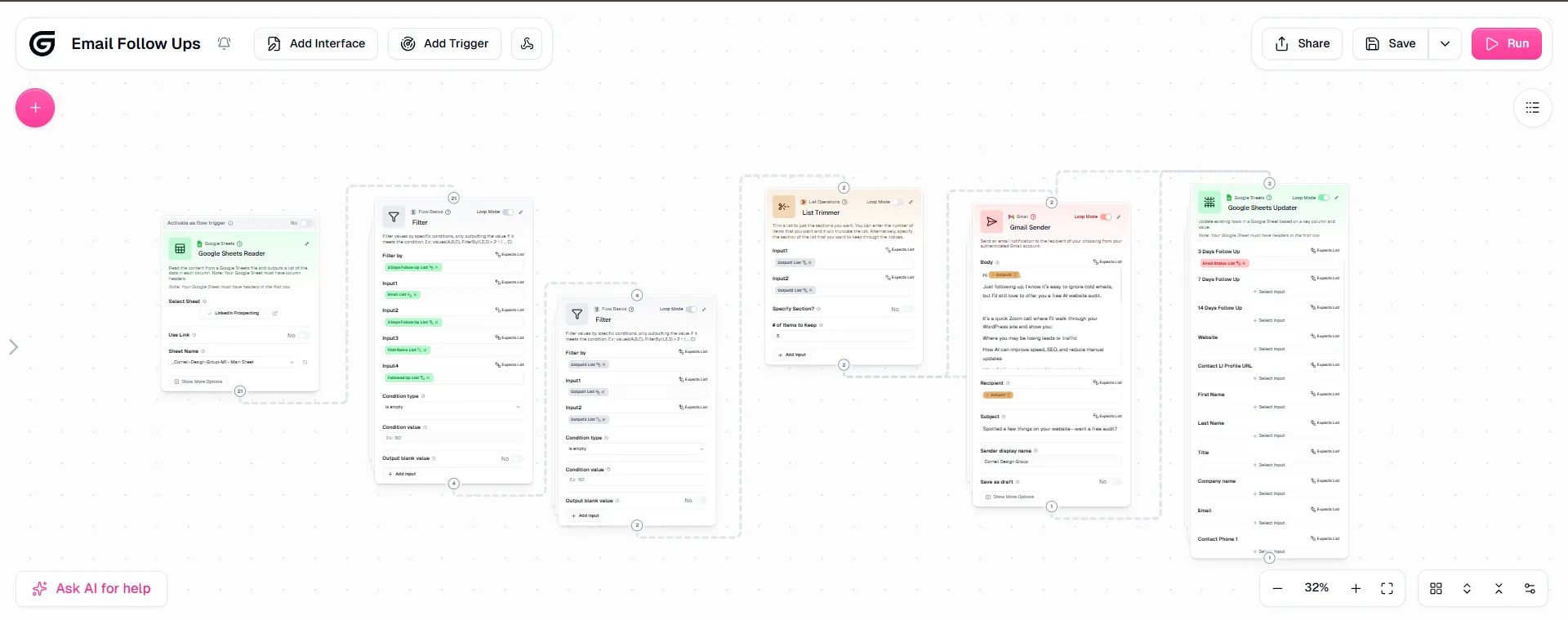
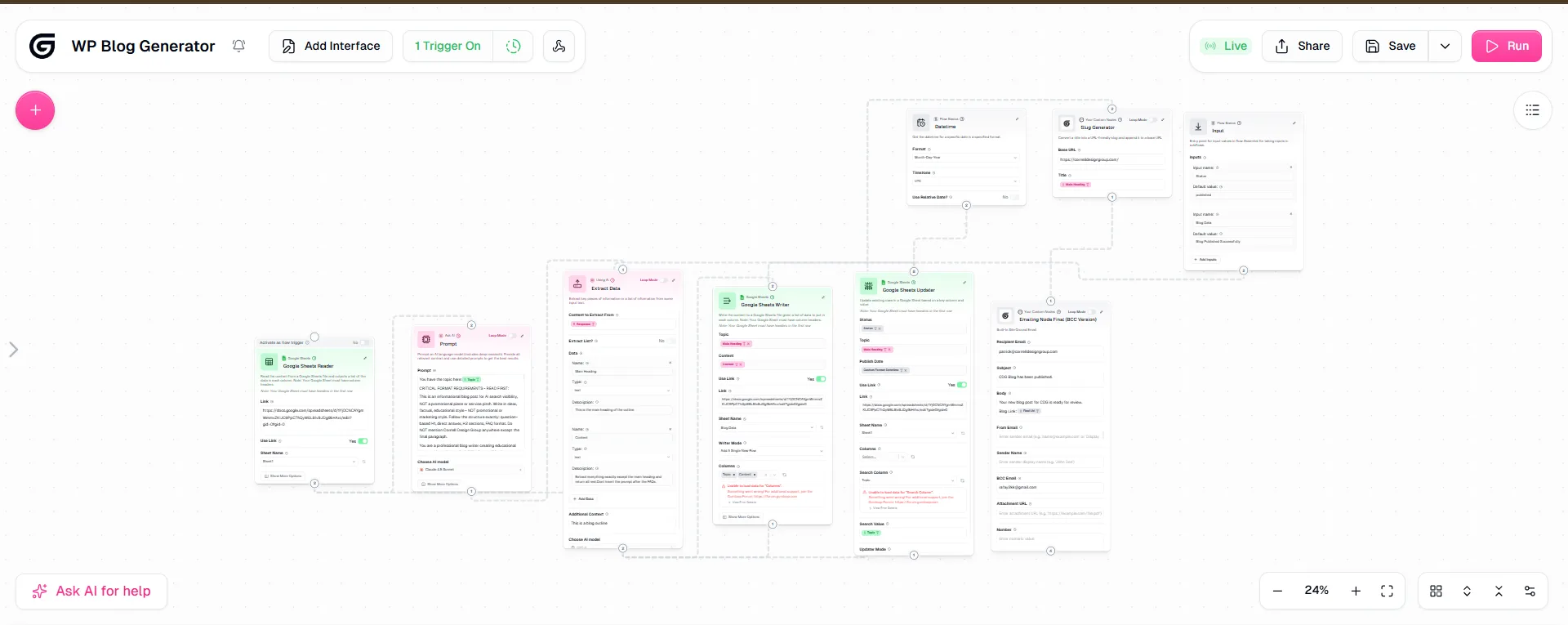
We've built versions of most of these — see the Apollo-based lead sourcing workflow, the automated follow-up sequence, and the AI-drafted WordPress publishing pipeline in our portfolio.
What still needs a human
Judgment calls stay human: whether a message actually sounds like your brand, whether a claim is accurate, whether a lead's tone means they need a different approach than the sequence assumes. Automation removes the busywork around those decisions — it shouldn't remove the decision itself.
How much this costs
There's no flat price, because the cost depends on how many tools you're connecting and how much approval logic is built in. We've written a full breakdown in how much AI automation actually costs.
What is AI automation?
A workflow that connects your existing tools and uses AI to handle repetitive judgment calls — like reading and routing a lead — instead of a person doing it manually each time.
How does AI automation work?
It's built from three parts: a trigger (a new form submission, a scheduled time, a new record), an AI step that reads or generates content, and an action that moves the result into another tool — a CRM, an inbox, a CMS.
What can businesses automate with AI?
Lead capture and enrichment, follow-up and nurture sequences, outbound outreach, content drafting and publishing, and reporting are the most common starting points — see the section above for specifics.
What is an AI agent?
A more autonomous version of AI automation — instead of following one fixed sequence, an agent can decide which of several actions to take based on the situation, within guardrails you define. See what is an AI agent? for a full breakdown.
Related service
The connective tissue between your tools