Automate
Agents that know what they're not allowed to do.
Scoped AI agents for research, qualification and drafting — every action passes a guardrail check first, and anything outside scope gets escalated to a person, logged and reviewed.
Agent Pipeline
LIVETask assigned
Defined & scoped
Agent reasons
Plans the steps
Tool / API call
Reads or drafts
Guardrail check
In scope?
Action taken
Executes
Human review logged
Visible & auditable
Oversight
Not a black box — a log you can actually read.
Every action an agent takes is timestamped and visible, whether it completed cleanly or got escalated because it hit the edge of its scope. Nothing runs invisibly in the background.
Agent activity
Last 2 hoursWhat's included
What we build for you
Scoped task automation
Guardrails & approval steps
Monitoring & fallbacks
Real Work
Scoped agent-style automations we've actually built.
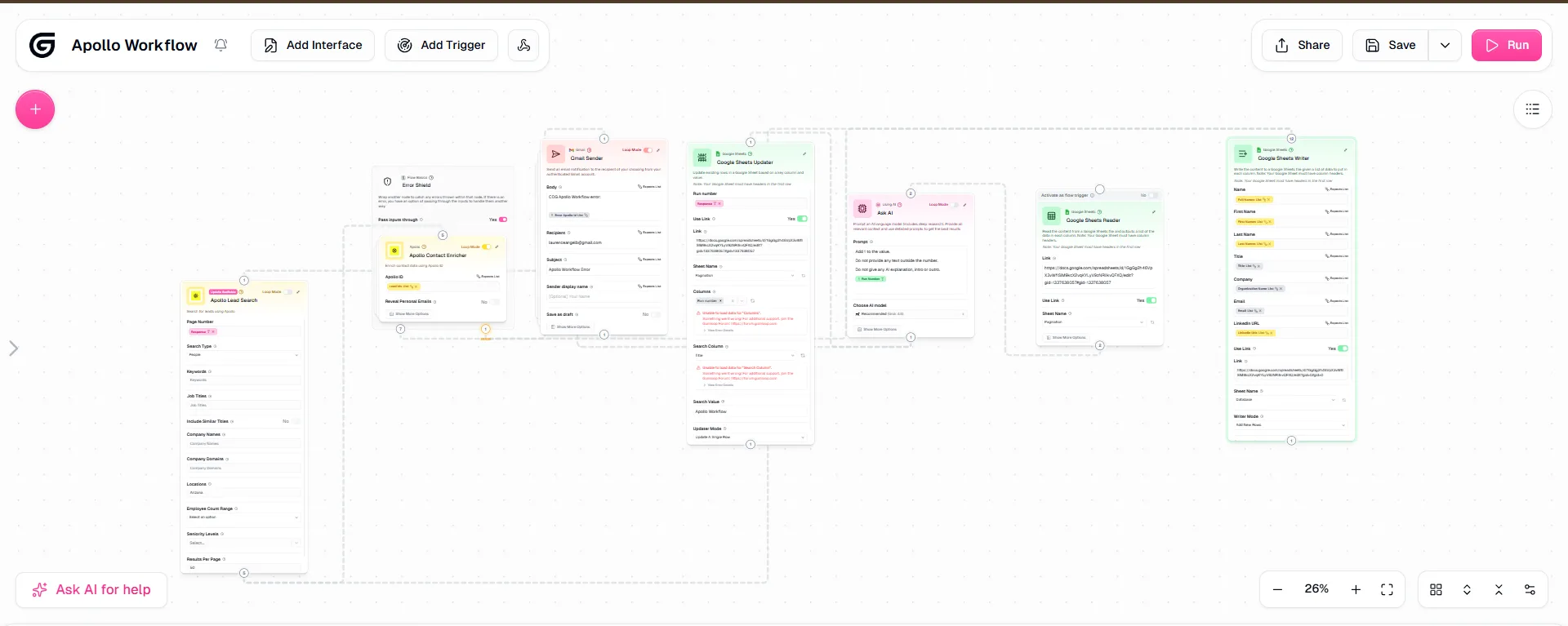
Apollo Lead Sourcing & Enrichment
An automation that searches Apollo for matching prospects, enriches each contact, and delivers clean, ready-to-contact leads without manual list-building.
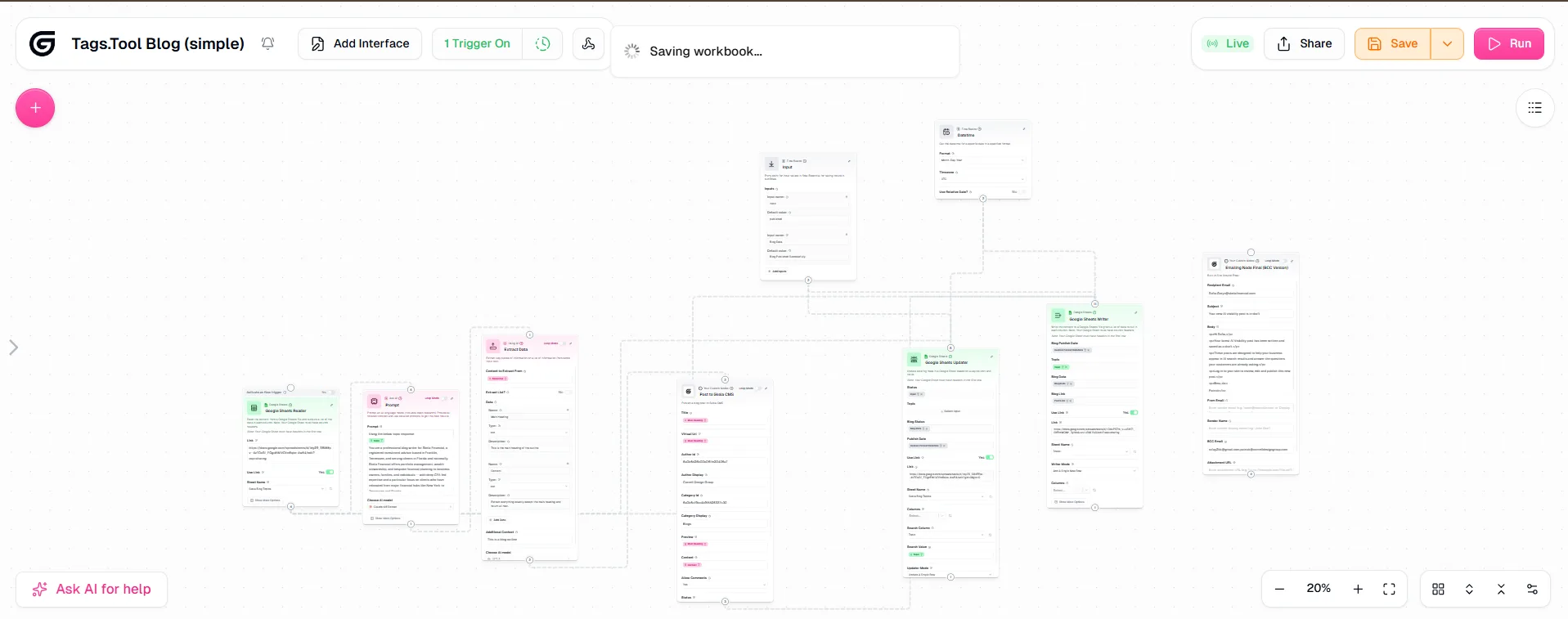
Automated Tagging Tool
A tagging automation that classifies and labels incoming content or contacts automatically, keeping records organized without manual tagging.
Frequently asked questions
What kinds of tasks are actually a good fit for an agent?
Repetitive, well-defined work with a clear scope — drafting a reply, pulling data from a known set of tools, qualifying a lead against fixed criteria, summarizing or logging information. Tasks that involve real judgment calls with irreversible consequences — sending money, changing a contract, anything that can't be undone — are either kept out of scope entirely or routed through a guardrail that stops the agent and asks a person first.
What happens when an agent gets stuck or isn't sure what to do?
It stops and escalates instead of guessing. Every agent we build has a defined path for 'I don't know' — if a task falls outside what it's scoped to handle, or a guardrail check fails, the agent logs what it was trying to do and hands it to a person rather than taking a best-effort action anyway.
How do you actually stop an agent from taking the wrong action?
Guardrail checks run before an action executes, not after — the agent has to pass a defined check (allowed tools, allowed fields, allowed recipients, rate limits) before anything happens. Anything that fails that check, or falls outside the agent's defined scope, gets escalated to a human and logged rather than attempted. By default, these agents operate inside those guardrails and are not left fully autonomous — removing a guardrail for a specific action is something we'd only do if you explicitly ask for it and sign off on the risk.
Let's build the system
Ready to see what your business looks like fully connected?
A 30-minute call to map your current systems and where automation would actually move the needle.